


Welcome to a brand-new Week 22! Let’s dive into this week’s update.
#Chittagong port #Chittagong city #BD cargo volume #Import container #Colombo port #Singapore port #China port #Rotterdam #Supply Chain #Hamburg Port
CHITTAGONG PORT & CITY
*Very stable situation at Chittagong port.
*Vessel berthing takes 3 to 4 days.
*The berthing of the Feder vessel is improving.
*Chittagong road construction & development are going on.
*Road traffic congestion is delaying movement from the depot to the port area, and regular traffic on Chittagong Road is also causing problems.
*Transports are moving better.
*EQP availability is better and available now.
COLOMBO T/S PORT:
*Port activities are normal.
*Transit time is 4 to 5 days.
*Port congestion is going on.
* Transit time will be around 42 to 46 days with HAPAG.
SINGAPORE:
*Port activities are normal.
*Transit time is 4 to 5 days.
*Port congestion is going on.
*Transit time will be 44 to 46 days with CMA CGM.
Hamburg Port Update:
# Yard utilization is moderate with no expected changes over.
# Labour availability on the waterside improved due to lower yard utilization and less manual workload within the terminal.
# Overall labor availability is ok.
Rotterdam Port Update:
# Yard on a good operational level.
# Container capacity is under control.
# Berth line-up with fewer vessels alongside.
# Import pick-up dwell times back to a normal operational level.
# Labor availability is normal.
‘Manual might’: Ctg port’s GCB records new high in daily handling, outpacing modern terminals
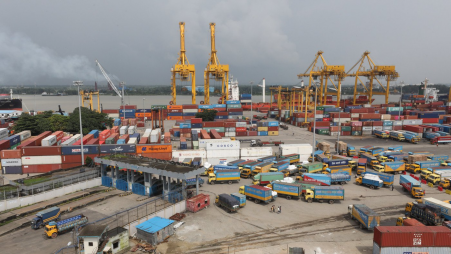
# Despite operating under manual systems with limited infrastructure, the general cargo berth (GCB) at Chattogram port has recorded remarkable growth in container handling, outpacing even some of the port’s modern container terminals.
# Previously, each vessel at the GCB handled an average of 600 to 650 TEUs (twenty-foot equivalent unit) of containers per day, which has now risen to over 800 TEUs.
# Handling 832 TEUs per day at each vessel, GCB outperformed the modern and dedicated Chattogram container terminal (CCT) and New Mooring container terminal (NCT) in April. In the month, CCT handled 684 TEUs and NCT 818 TEUs.
3 more Bangladesh RMG factories get LEED certification

# This new addition brings the total number of LEED Certified Factories in Bangladesh to 243, with 101 Platinum and 128 Gold Certified.
# Three new RMG factories in the country got LEED certification, which is a testament to the country’s unwavering commitment to environmental sustainability in the readymade garment (RMG) sector.
Denim Expo focuses on building industry capacity post-LDC
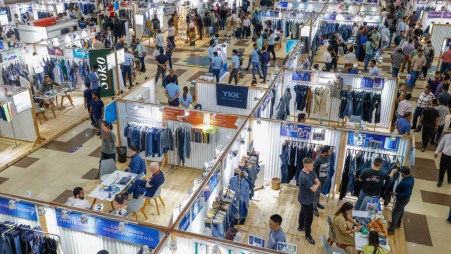
# The Bangladesh Denim Expo concluded on Tuesday (13 May), strongly emphasizing the need to equip the denim industry for the country’s upcoming graduation from Least Developed Country (LDC) status.
# The two-day event features 57 exhibitors from 13 countries, including Bangladesh, India, Pakistan, China, Turkey, Spain, Italy, Vietnam, UAE, Germany, Switzerland, and the USA.
Devising a blue economic zone for Bangladesh
# The Blue Economy offers a suite of opportunities for sustainable, environment-friendly, equitable growth in both traditional and emerging sectors of Bangladesh.
# One of the maritime nations of South Asia. This can be capitalised by devising an Exclusive Economic Zone (EEZ) targeting the ocean resources.
# There is huge potential for attracting investment from the global business community, which is pursuing sea-based investment portfolios.
# Context of the Blue Economic Zones: With its extensive coastline and access to the Bay of Bengal.
# Bangladesh has a great potential for a thriving blue economy that emphasises modern technology-based deep-sea fishing, marine transportation, sustainable energy production, bio-prospecting and conservation, and sustainable use of living ocean resources.
Key Logistics Developments in Bangladesh – Week 17, 2025
Bangladesh, World Bank sign $850 million deal to boost jobs, trade
# Bangladesh and the World Bank signed two financing agreements totaling $850 million.
# $650 million is allocated for the Bay Terminal Marine Infrastructure Development Project in Chattogram.
# This initiative aims to expand and modernize port facilities, including building a climate-resilient breakwater and access channels to accommodate larger vessels, thereby reducing turnaround times and transport costs.
Singapore Expresses Interest in Enhancing Bangladesh’s Logistics Sector
# A Singaporean business delegation, led by Derek Loh, the non-resident High Commissioner of Singapore to Bangladesh, met with leaders of the Dhaka Chamber of Commerce and Industry (DCCI) to explore avenues for deepening bilateral economic cooperation.
# Singapore has reaffirmed its interest in partnering with Bangladesh to strengthen its logistics sector and overall trade competitiveness, leveraging its global leadership in modern port management and trade facilitation.
Bangladesh Pledges Increased U.S. Cotton Purchases Amid Tariff Concerns
# To protect its crucial garment industry, Bangladesh has pledged to increase purchases of U.S. cotton and other goods in hopes of persuading President Donald Trump to rescind a 37% tariff on its exports.
# Interim leader Muhammad Yunus addressed Trump in a letter affirming Bangladesh’s support for the U.S. trade agenda and proposed tariff reductions on various U.S. products, as well as an expansion of imports, including wheat, corn, and soybeans.
Textile Waste Recycling Push Gains Momentum
# Bangladesh, as the world’s second-largest apparel producer, faces significant environmental and economic challenges due to limited recycling of its vast textile waste, estimated at 577,000 metric tons annually.
# Currently, minimal waste is recycled domestically, with much exported or dumped, polluting the environment. Efforts are underway to enhance recycling capabilities to stay competitive and retain textile sector jobs.
Can Bangladesh fend off Vietnam in the RMG race?
# Bangladesh’s status as the world’s second-largest garment exporter has become increasingly precarious, driven by a confluence of global trade shifts, regional competition, and structural inefficiencies at home.
# The imposition of 37 percent tariffs by the Trump administration has only intensified the pressure on Bangladesh, prompting industry leaders and analysts to express concern over the country’s ability to maintain its global standing.
# The country now faces a decisive test of its export resilience and trade negotiation capacity.
# For a sector built on cost competitiveness and heavily dependent on price-sensitive markets, the tariff escalation poses a direct threat to a business model long anchored in low-wage labour.
Bangladesh Economy to Slow to 3.9% Growth in FY2025 Before Rebounding in FY2026
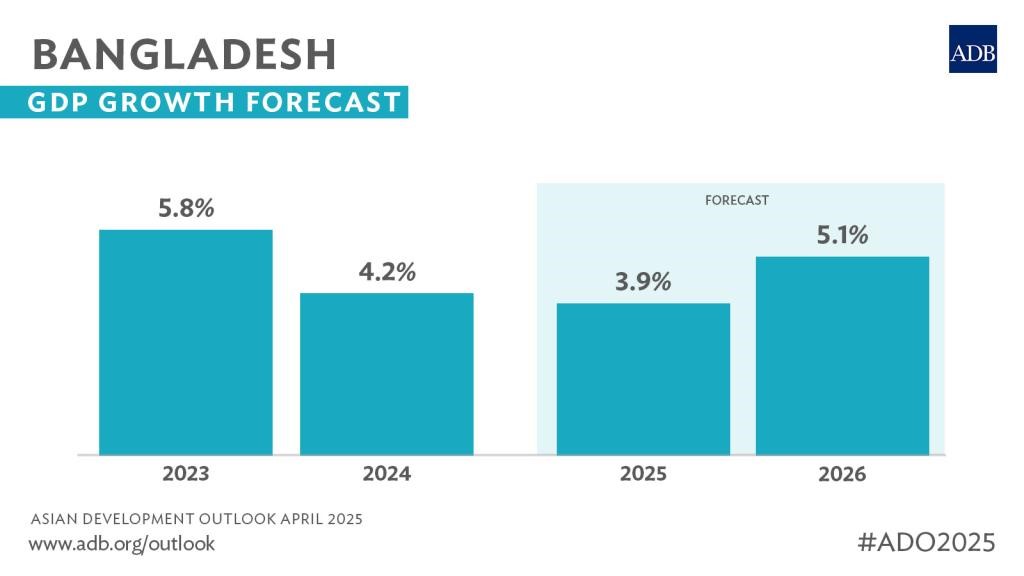
# Bangladesh’s gross domestic product (GDP) is projected to grow by 3.9% in fiscal year (FY) 2025 before increasing to 5.1% in FY2026, according to the Asian Development Bank’s (ADB) latest report, the Asian Development Outlook (ADO) April 2025.
# Despite growth in Bangladesh’s exports in the garments sector, the slower growth forecast reflects weaker domestic demand amid political transition, risks of natural disasters, industrial unrest, and high inflation. Bangladesh’s economic growth was 4.2% in FY2024.
# Inflation is forecast to accelerate from 9.7% in FY2024 to 10.2% in FY2025 due to stifled competition in wholesale markets, inadequate market information, supply chain constraints, and the depreciation of the taka. The current account deficit is anticipated to shrink from 1.4% of GDP in FY2024 to 0.9% of GDP in FY2025 as the trade deficit narrows and remittances rise.
Bangladesh’s newest textile treasure
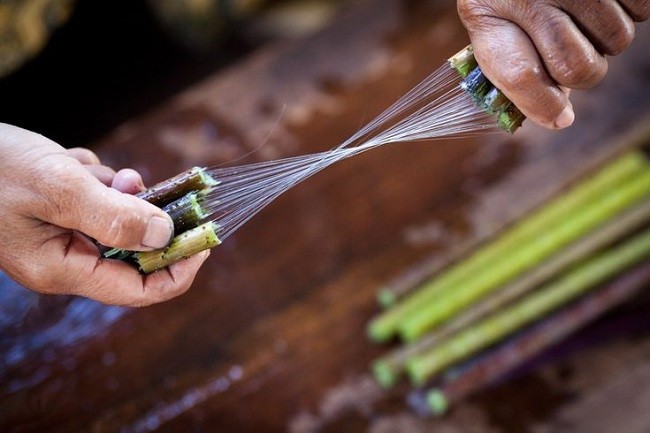
# Bangladesh has a long history of making beautiful fabrics, like the famous Dhaka Muslin, Jamdani etc. Now, a new fabric is getting attention made of lotus silk. These are soft, eco-friendly and luxurious yarn made from lotus plant stems.
# Bangladesh has plenty of lotus plants, making it easier to produce these fabrics. Research shows that Bangladesh needs only 15,000 lotus stems to make 1 kg of lotus silk yarn, while other countries require almost twice as much.
Have a great weekday ahead.


Our Annual Conferences are the place for our Global Freight Group members to join from all corners of the world and network for mutual growth, collaboration, and success in the freight industry.
Next Conference Past Conferences


REGISTERED OFFICE
1343 Terrell Mill Road, Suite 200
Marietta, Georgia, USA 30067
admin@globalfreightnet.org
ADMINISTRATION OFFICE
secretary@globalfreightnet.org